



If you or your teen is in crisis, call or text 988, or text HOME to 741741.

(919) 335-5053

Families are part of the work.

Family involvement is built into every treatment plan, because what happens at home between sessions shapes what treatment can hold.

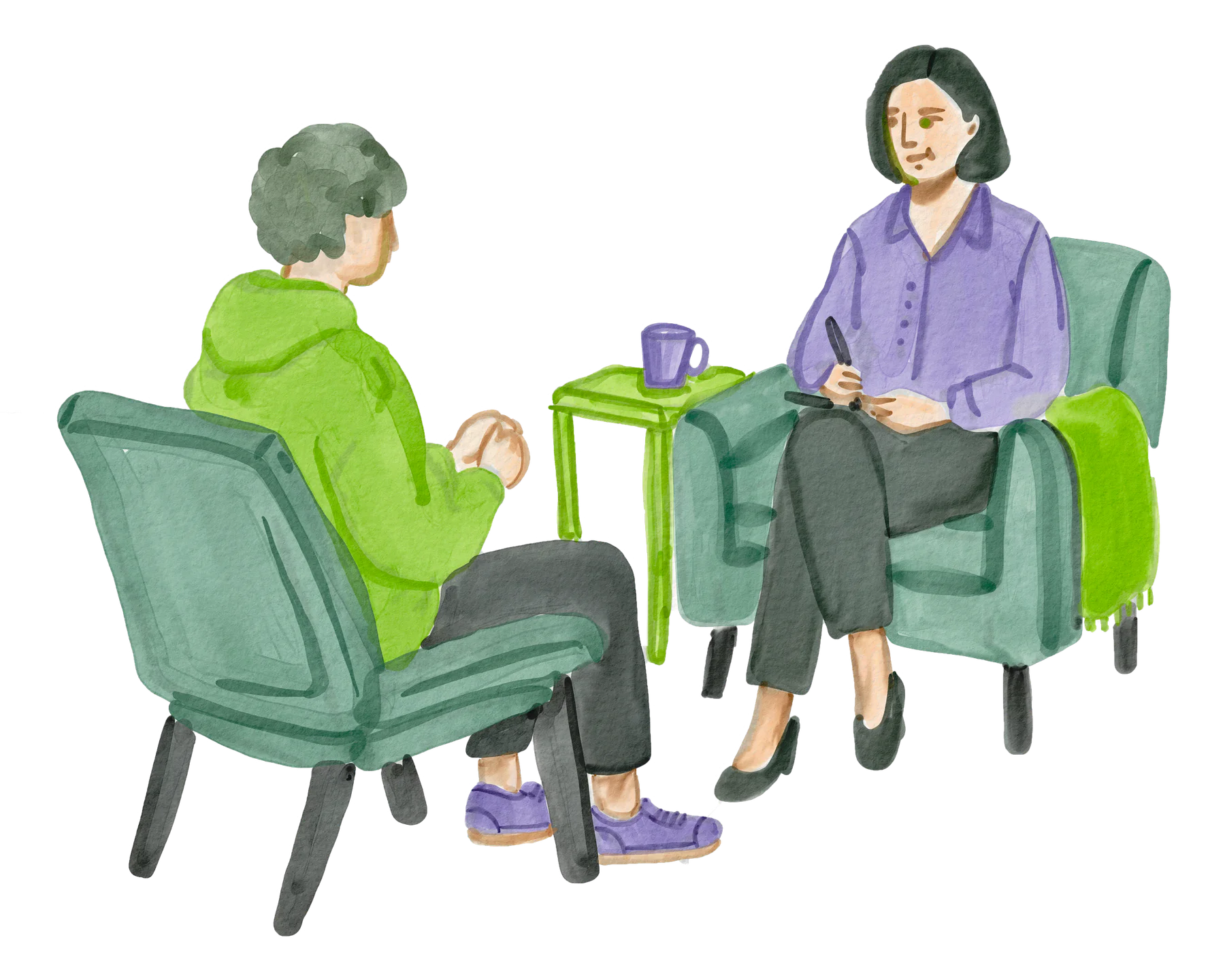
A watercolor illustration of a teen meeting with a therapist

When one person is struggling, the whole family feels it.

Family systems therapy starts from a simple idea: a person does not exist in isolation. The relationships, patterns, and dynamics inside a family shape how each member thinks, feels, and behaves. Those patterns are often where the most important work happens.

Family involvement at Joshua Tree begins with the first conversation and continues through discharge planning. That is not because we think the family caused the problem. It is because what happens at home between sessions matters as much as what happens in the room.

Built in

What family involvement includes.

Family therapy sessions

Family therapy is part of the treatment plan, scheduled with your teen’s therapist as care begins. Sessions build shared language for what your teen is experiencing, work on communication and conflict, and give parents concrete ways to support their teen between sessions.

The structure is set through assessment and the individual treatment plan, and it adjusts as care progresses.

Skill-building for parents

Parents and caregivers build the same DBT skills their teen is practicing: mindfulness, distress tolerance, emotional regulation, and interpersonal effectiveness.

When the adults at home share the language and the tools, the skills are easier to keep using after a hard week, and the work in session connects to what happens at the kitchen table.

What happens at home matters.

Teens practice skills in the hours between sessions. Family work gives everyone a shared way to name what is happening and respond when conflict rises. It also gives parents a place to ask what support should look like now.

Family therapy does not assign blame. It connects the work in the room to the relationships where a teen lives every day.

In session

What families work on.

Communication patterns

How family members talk and listen to each other, including the patterns that tend to escalate, and how to repair after conflict.

Role clarity

Understanding each person’s role in the family system, and where those roles may have become rigid or unhelpful.

Parenting approaches

What developmentally appropriate support looks like at this stage, especially for parents of younger adolescents.

Processing

Making room for what the whole family is carrying.

How the work changes with age.

Parents of pre-teens often carry different questions than parents of older teens. With younger clients, roughly ages 10–12, family work leans more on the adults: at that stage, a steady parent nearby is often what helps a child settle, so we work closely with parents on what to do in hard moments.

With older teens, ages 13–17, the work shifts toward autonomy. Family sessions help parents stay connected while making more room for identity, peer relationships, and increasing independence.

Programming is developmentally appropriate across ages 10–17, and our admissions team will explain how groups are organized for your child’s age.

← Return to our full approach

Family involvement starts on day one.

When you call, we’ll talk about your teen and about how you’re doing, because both matter.